Home Electrification Guide
A simple step-by-step guide for Southland homeowners: list your appliances, work out daily kWh, cut demand first, then size solar and batteries to what is left.

Discover the advantages of switching to electricity in your home, farm or business. For an average Southland home running on LPG and petrol, going electric cuts energy bills by about $7,700 a year.
Switching to electric equipment can significantly lower your energy bills, so you can save money and invest in your family or business.
$7,700 a year off the average Southland home's energy billsElectrification cuts greenhouse gas emissions and promotes a cleaner environment, contributing to a healthier planet for future generations.
210,000 tonnes of CO₂e a year avoided across Southland homesRelying less on fossil fuels improves air quality and health. Gas cooking puts nitrogen dioxide into kitchen air, and vehicle exhaust costs New Zealand dearly in health.
3,200+ child asthma cases a year linked nationally to gas cooking (EECA research, cited by Rewiring)Electrification strengthens local economies and lets communities take charge of their energy future, instead of sending fuel money offshore.
1,500 new Southland jobs; $550,000 a day now spent on fossil fuelsYou don't need to do it all at once. The cheapest way is to replace each fossil fuel machine with the electric version when it wears out.
From Rewiring Aotearoa's Electrifying Southland report, October 2026, using local heating needs, driving distances and 2026 prices.
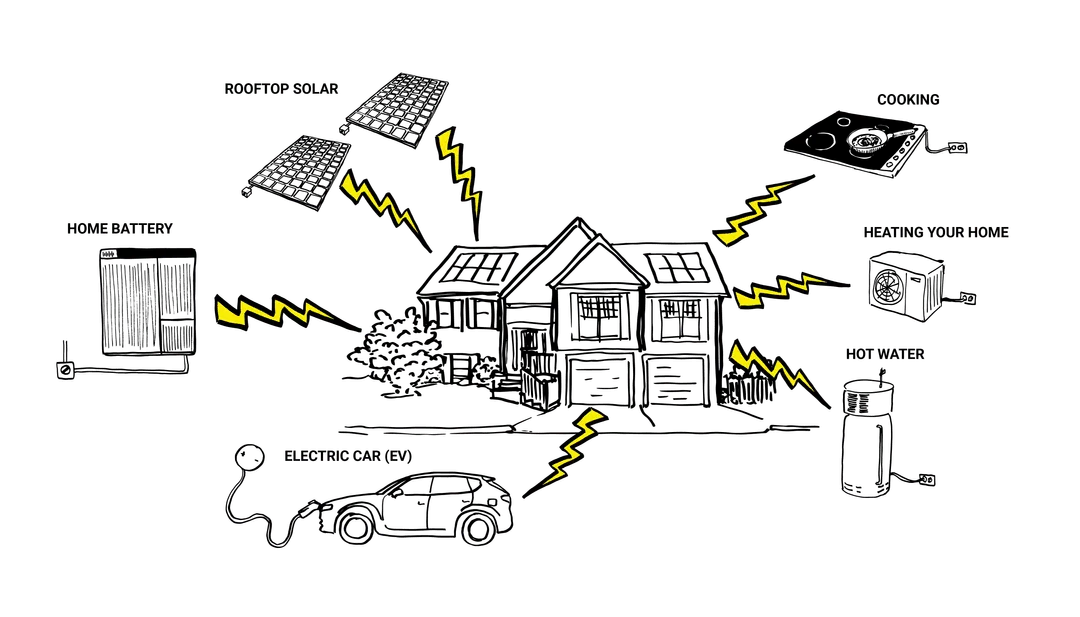
Heat pumps use around 75% less energy than gas heaters for the same warmth, cool in summer, and usually cost less to buy. In Southland, going from a flued LPG heater to a heat pump saves about $33,000 on bills over 15 years, or $36,000 once you count the cheaper upfront cost. Insulate and draught-proof first if you can; a warm, dry house needs a smaller heat pump. Rewiring guide: heating and cooling.
Hot water is about 30% of a typical home's energy use. A hot water heat pump costs more upfront but has the lowest running costs. Swapping LPG instant hot water for one saves about $12,000 on bills over 15 years in Southland, or $9,200 after the upfront cost. Time it to heat when power is cheap or your solar is running and it works like a thermal battery. Rewiring guide: water heating.
Cooking doesn't use much energy, so the saving is small: about $1,900 over 15 years going from LPG to induction. The bigger reason is health: gas cooking puts nitrogen dioxide into your kitchen air. Rewiring guide: cooktops.
Southland households spend about $500,000 a day at the pump. Switching a petrol medium SUV to an electric one saves about $1,500 a year including road user charges, or $12,000 net over 15 years. A diesel ute driver saves about $14,000. More in our EV basics guide.
A 9 kW solar system with a 10 kWh battery saves a Southland home about $2,500 a year on power bills. Financed at 5.5%, solar works out at about 12c/kWh against roughly 26c/kWh from the grid. Panels last 30 years or more; batteries around 15. Ask for a battery that can run your essentials when the grid is down. Rewiring guide: solar and home batteries.
The national step-by-step guide, machine by machine. Open it in a new tab if it doesn't show below.
Practical help for individuals and businesses making the switch, from choosing technology to understanding the support available.
A simple step-by-step guide for Southland homeowners: list your appliances, work out daily kWh, cut demand first, then size solar and batteries to what is left.
Where Southland businesses can get help to electrify: EECA co-funding, Great South, green business loans, and the practical first steps.
Where Southlanders can find reliable, official information on electric vehicles: costs, charging, road user charges, and where to charge around Invercargill, Gore and Te Anau.
Yes. Modern heat pumps keep working well below freezing and use around 75% less energy than gas heaters for the same warmth. Swapping a flued LPG heater for a heat pump saves a Southland home about $36,000 over 15 years, including the cost of the heat pump.
Southland drivers average about 170 km a week, well within a modern EV's range. Most charging happens at home, often from a standard plug overnight. Public chargers sit at least every 75 km on 97% of New Zealand's state highways. See our EV basics guide.
Not to save money, but a battery stores daytime solar for the evening and keeps essentials running in a power cut. Ask for a hybrid inverter and battery that can run essential circuits when the grid is down. That matters in Southland, where the October 2025 windstorm left many homes and farms without power for days.
Work out your daily electricity use first, cut the waste, then size to what is left. Our home electrification guide has a load table and the steps. Rewiring's Southland modelling uses 9 kW of solar and a 10 kWh battery for an all-electric home with two EVs.